
Last updated November 22, 2026
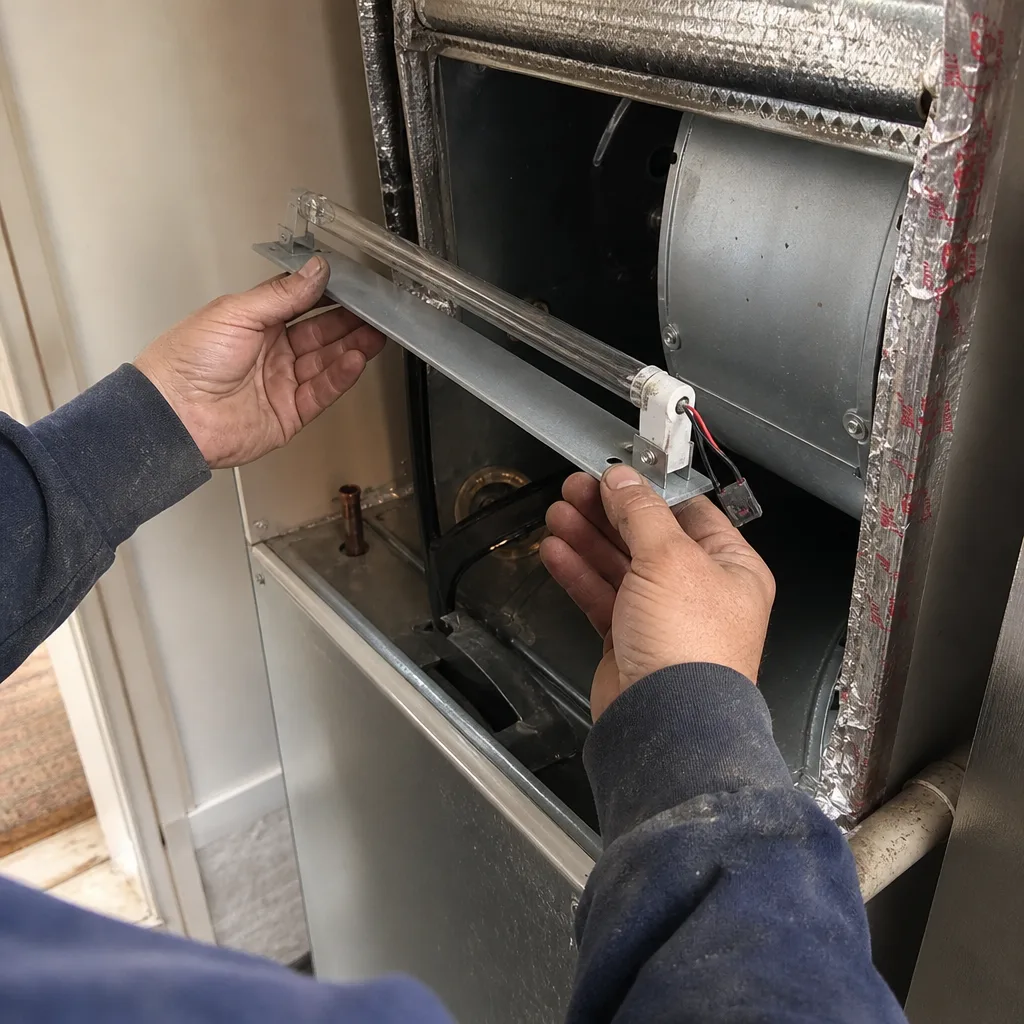
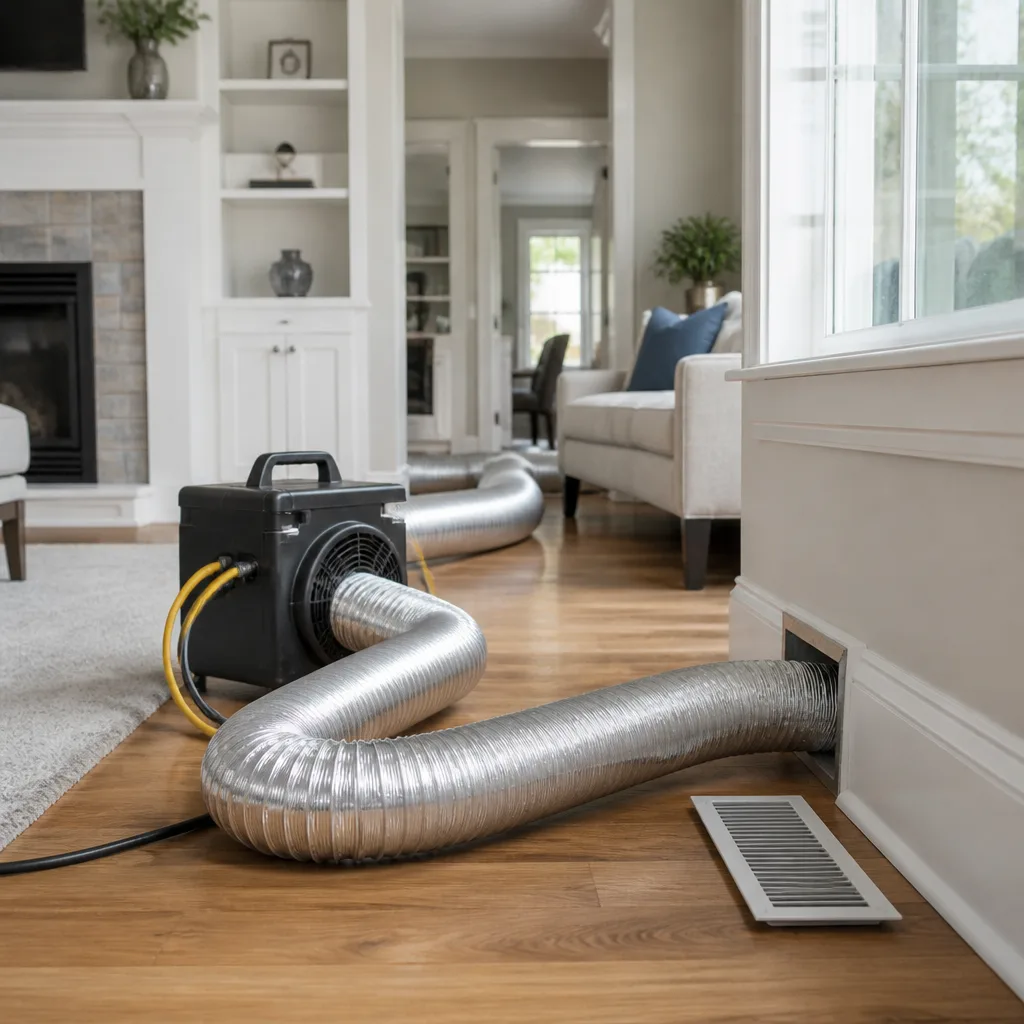 Whole-home duct cleaning
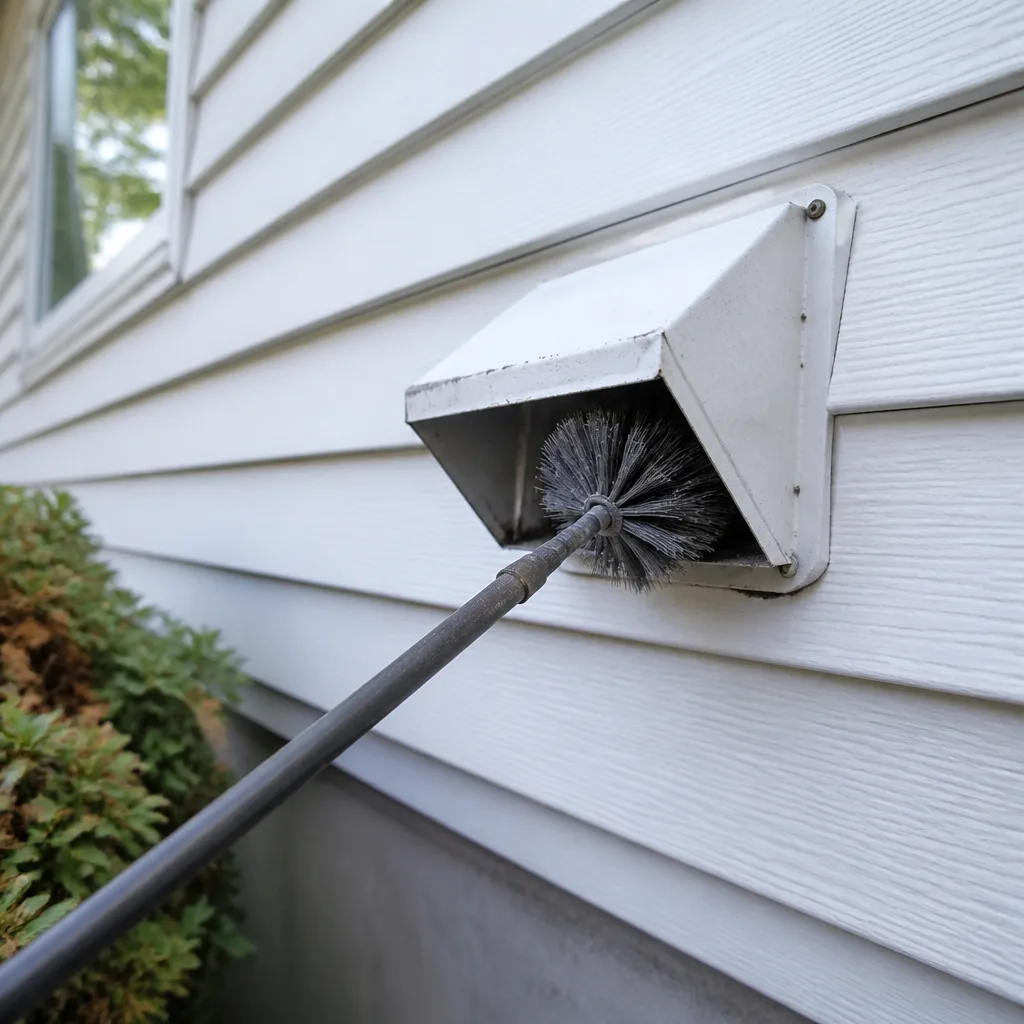 Dryer vent cleaning
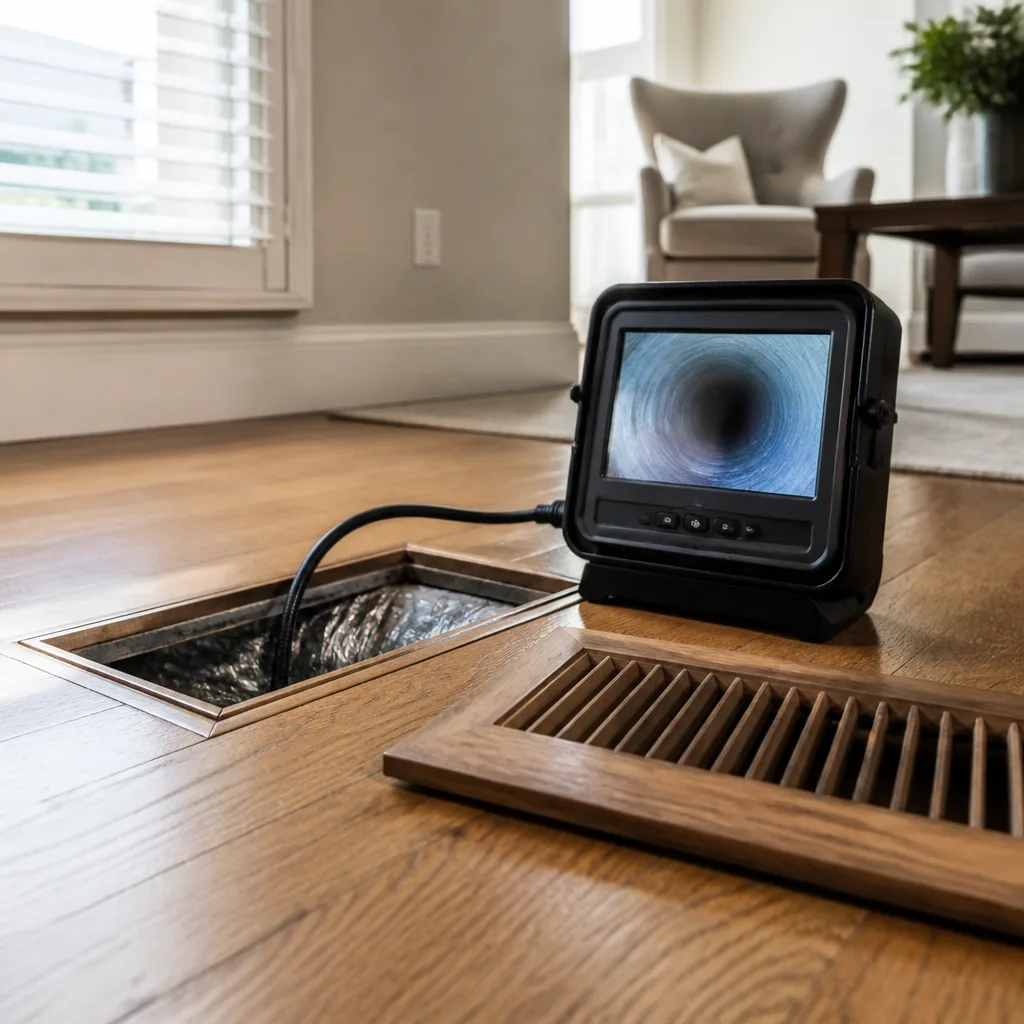 Camera inspection
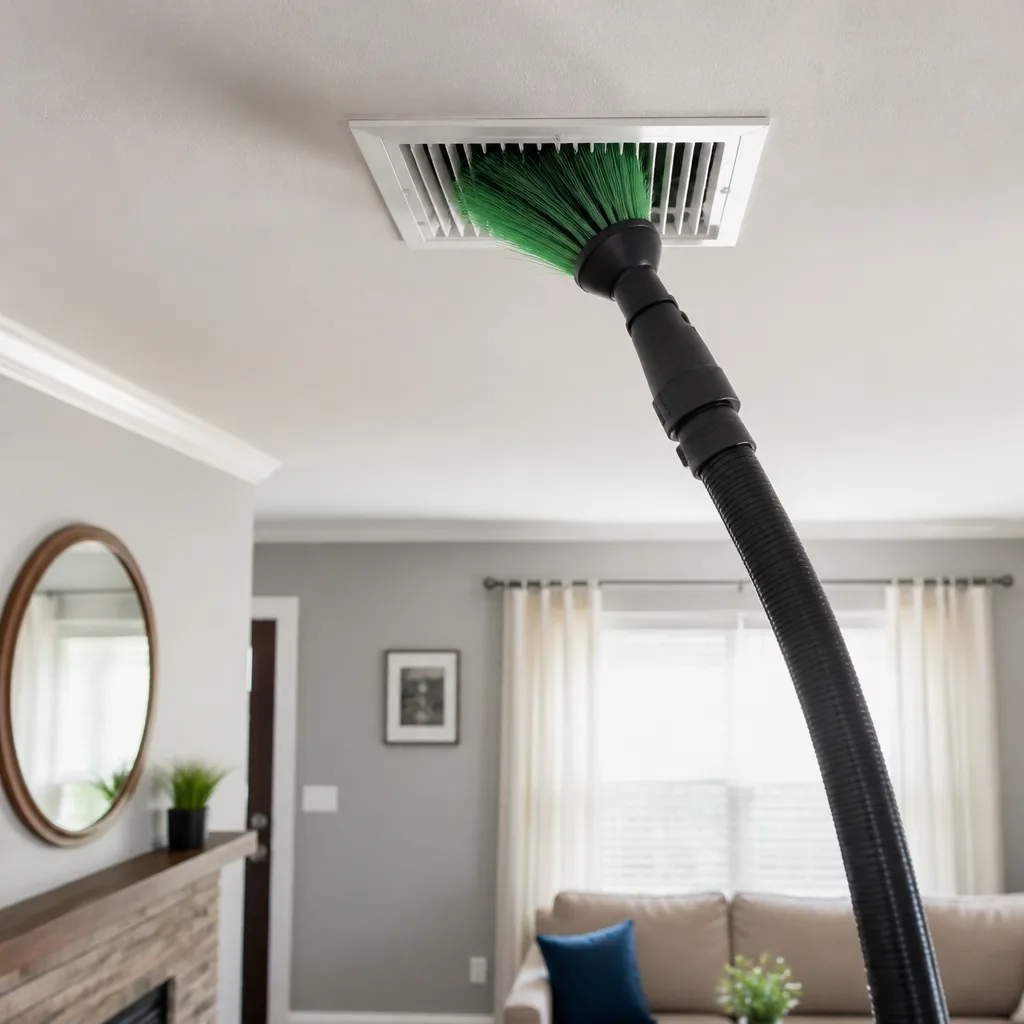 Sanitizing & deodorizing
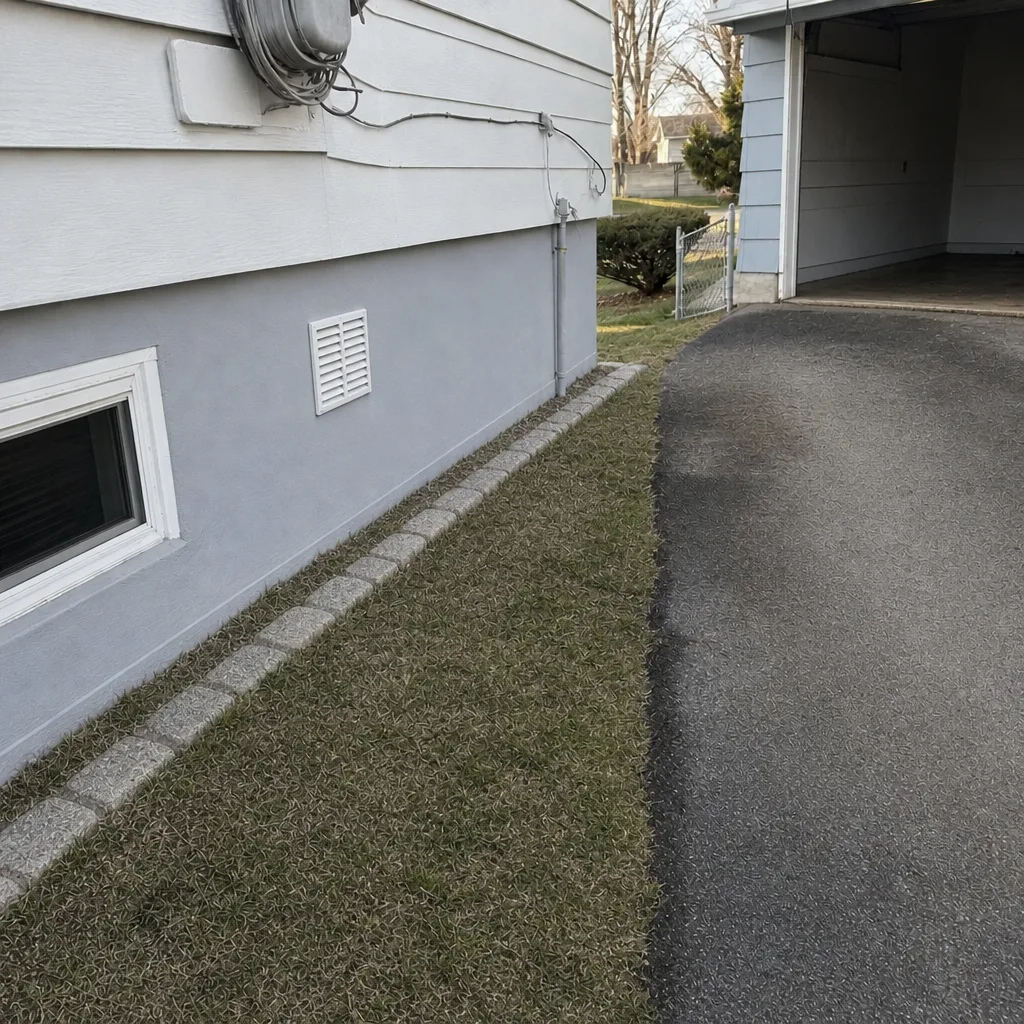
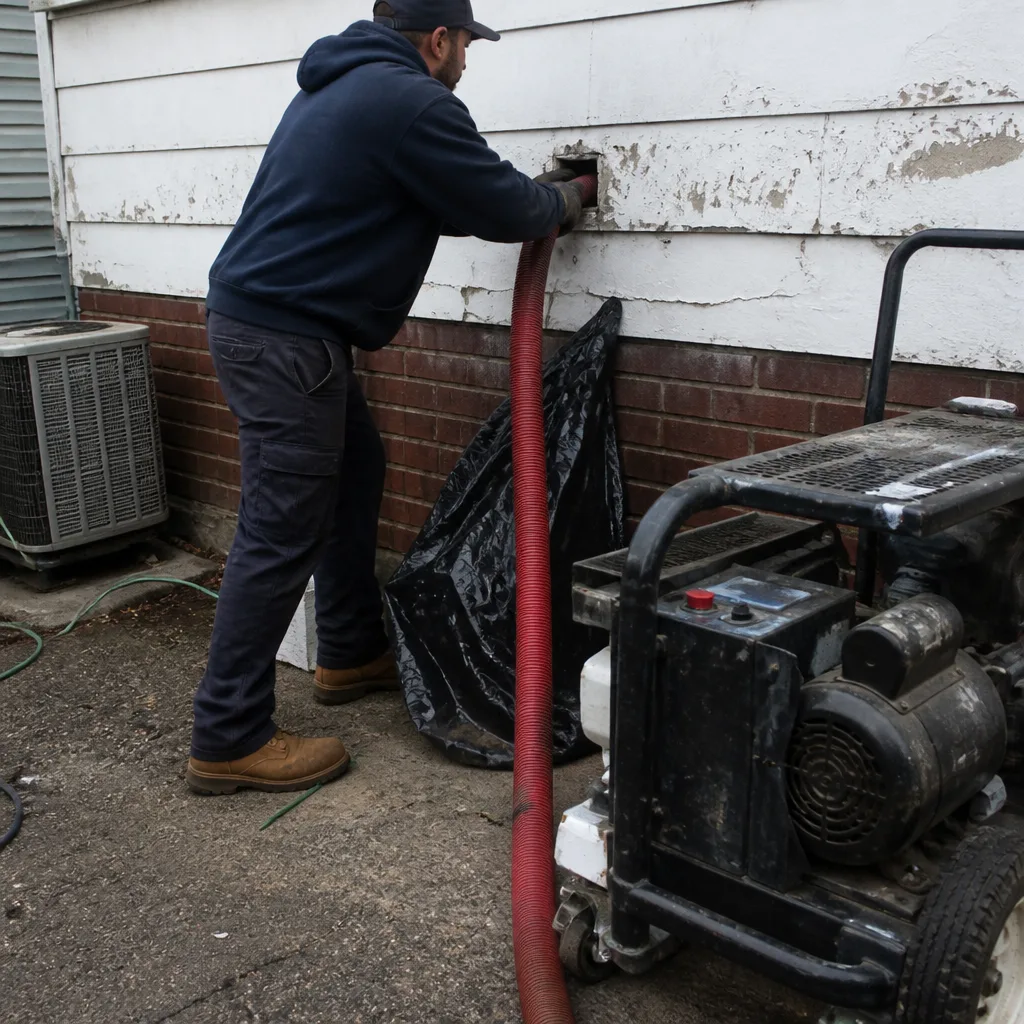
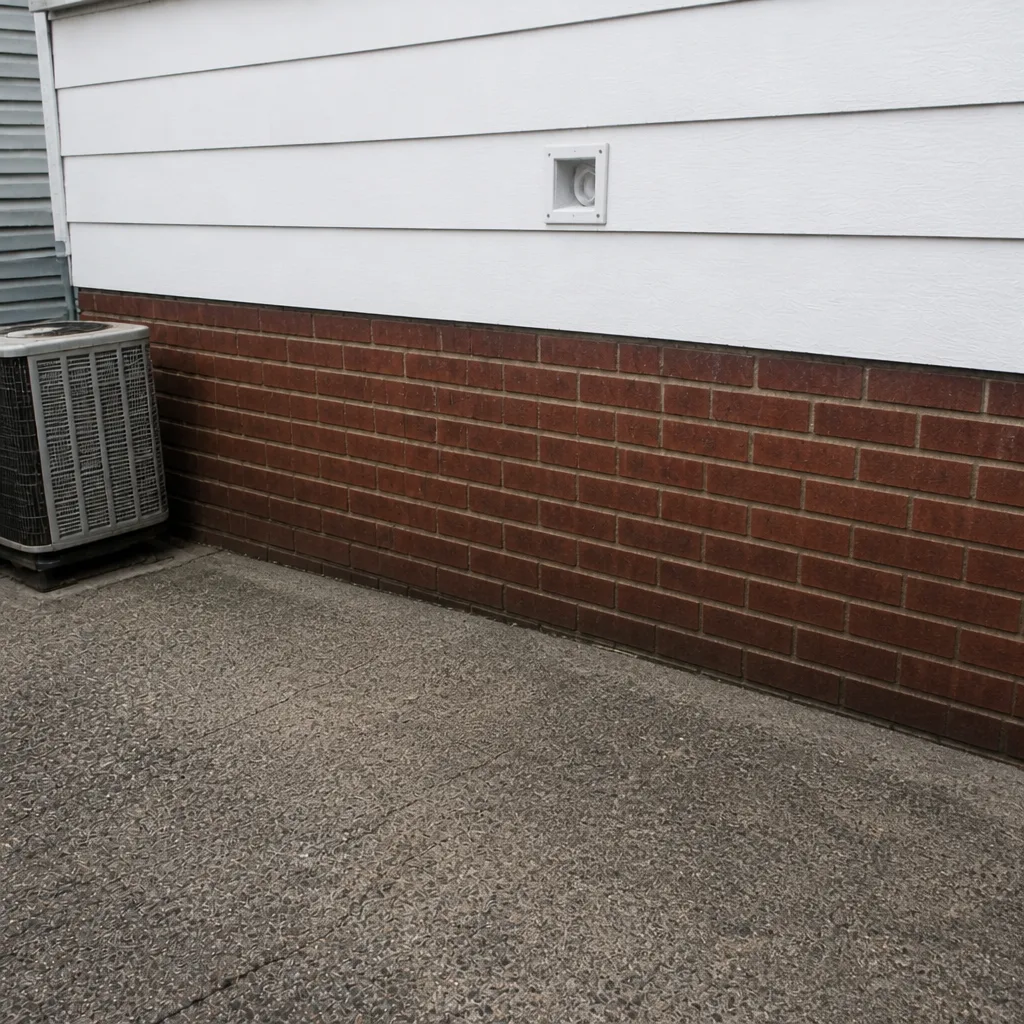
Whole-system duct and dryer vent check with before-and-after photos - you see exactly what came out of your vents
That "$99 whole-house special" is a bait ad - the real number appears once they are in your hallway, or the "clean" is a shop-vac at the register. We photograph the inside of your ducts before and after instead.
DIY vs Professional Air Duct Cleaning: The Bedford Park Homeowner’s Decision Guide
You can clean the first 12 inches of a supply register with a household vacuum and a brush, and that work is worth doing. But the main trunk line that runs through your attic or crawlspace operates under completely different physics. Disturbing debris there without containment pushes it deeper into the system and back into your living space, which is worse than leaving it alone. This guide separates the parts of your duct system you can genuinely maintain yourself from the parts that need negative-pressure source-removal equipment. It’s written for Bedford Park homeowners who want to make a rational decision instead of buying a full system cleaning they may not need, or skipping one they do.
Quick Answer
Most Bedford Park homeowners should do the register, grille, filter and dryer-vent-lint work themselves and leave the trunk line, return plenum and air handler coil to a professional with negative-pressure HEPA equipment. The real dividing line isn’t skill – it’s containment. Consumer vacuums and brushes loosen debris without capturing it, so cleaning those zones yourself often makes indoor air worse. A pre-inspection will tell you which side of that line your home is on.
Styles & brands we work with
- Whole-home duct cleaning
- Dryer vent cleaning
- Camera inspection
- Sanitizing & deodorizing
Table of Contents
- What Bedford Park Homeowners Can Legitimately Do Themselves
- Why the Equipment Matters More Than the Price
- The Zones That Require Professional Equipment
- When DIY Becomes a Liability
- What DIY Actually Saves and What It Defers
- How a Pre-Inspection Helps You Decide
- Cleaning, Sealing, and the Full Air Quality Chain
- The Dryer Vent Is a Separate Fire-Safety Problem
What Bedford Park Homeowners Can Legitimately Do Themselves
There’s real work you can do without any equipment beyond a shop vacuum, a soft brush and a screwdriver. None of it touches the parts of the system where contamination actually accumulates, but it does reduce what gets pulled into the ductwork in the first place. Here’s the short version.
- Clean the supply registers and return grilles. Remove the screws, take the grille outside, and wash it in a utility sink or with a hose. Dry it fully before reinstalling. Wipe the visible ledge inside the boot with a damp cloth and stop at the first 12 inches.
- Maintain the dryer vent lint trap. Clear the lint screen before every load, and once a month pull the screen out and wash it with soap and water – fabric softener leaves a film that clogs the mesh and defeats the screen.
- Upgrade your filter, correctly. Match the filter to your HVAC manufacturer’s rated MERV level. Going higher than the system is rated for can starve airflow and strain the blower, which is a common and expensive mistake.
- Keep a clear path around the air handler. Vacuum the immediate floor and exterior cabinet so dust isn’t sitting where the system can pull it back in through a return.
That’s the honest ceiling of DIY. It’s maintenance, not cleaning, and it’s worth doing regardless of whether you ever call a professional. In Bedford Park, where many homes were built decades ago and have complex retrofit ductwork, keeping the visible surfaces clear makes a noticeable difference to how quickly the registers stain.
Why the Equipment Matters More Than the Price
The gap between a homeowner’s shop vac and a professional cleaning rig isn’t horsepower. It’s containment. A shop vac pulls air and debris into a tank that sits in the room. A vacuum hose connected to a register pulls debris toward the hose but doesn’t necessarily move it from the far end of a long trunk run, and it doesn’t trap the fine particulate that gets stirred up in the process. Those fine particles are the ones that settle back out on your furniture and into the air your family breathes.
Professional remediation work runs on a different principle: create negative pressure at the system, agitate the surfaces, and capture everything at the source. That’s what we mean by HEPA-captured, not just loosened. In practice that means three equipment classes working together.
- Contact cleaning systems. Rotobrush is a rotary brush on a flexible whip that travels inside the duct and physically contacts the walls. It’s the same technology used in commercial and remediation work, and it’s what breaks up adhered debris that airflow alone won’t move.
- Source-removal HEPA units. Nikro HEPA equipment captures contaminants at the point of disturbance, so what comes off the duct wall goes into a filter rather than into your hallway.
- Air scrubbing during the job. Abatement Technologies air filtration runs while work is underway, holding airborne particle levels down in the rooms where technicians are working.
That combination is what separates a real system cleaning from the truck-mounted blow-and-go rigs that are common in this trade. If you’re comparing quotes, ask what equipment each company is bringing. A company that can’t name its equipment is telling you something.
The Zones That Require Professional Equipment
Three areas of a typical Bedford Park home need containment and negative pressure. Disturbing them without those controls redistributes contamination instead of removing it, and that risk is genuine enough that it’s worth stopping here rather than improvising.
The main trunk line
The trunk carries the highest volume of air in the system and accumulates debris along its entire length, not just near the registers. A consumer brush on a flexible rod reaches maybe 15 feet and knocks material loose from the walls before it can be captured, which sends it downstream toward the air handler or back out into rooms. Rotobrush contact cleaning with simultaneous HEPA capture is the tool this job actually requires.
The return plenum
The return side of a system is the low-pressure side, so it pulls air – and whatever is suspended in it – toward the air handler. Debris sitting in the return plenum is often the single largest source of the dust a homeowner sees. Removing it means opening the plenum, agitating it, and running negative pressure so the loosened material leaves the space rather than settling.
The air handler coil
The evaporator coil is a dense fin assembly that traps dust and, over time, supports microbial growth on a wet surface. A shop vac nozzle will bend the fins and can push debris further into the coil. Coil cleaning requires a controlled process, and if the growth is significant it also needs sanitizing with a product rated for HVAC surfaces. We would not suggest a homeowner attempt this, and any company that does is telling you something too.
For the full picture of what a proper air duct cleaning job covers, that page walks through the steps in order.
When DIY Becomes a Liability
For most homes, a homeowner’s register cleaning is harmless. But there are specific conditions where any DIY agitation in or near the duct system is a genuine hazard, not just a wasted afternoon. If any of these apply, skip the brush entirely and get an opinion before you touch anything.
- Fiberglass duct liner. Many older systems are lined internally with acoustical fiberglass. A consumer brush breaks the liner surface and releases fibers into the airstream. Once the liner is damaged, the fix is liner removal or duct replacement, not another cleaning.
- Vermiculite insulation in adjacent spaces. If the ductwork runs through or near a space insulated with vermiculite, which is common in older homes, disturbing anything there can move asbestos fibers into the air. This is one of the clearest cases where a professional assessment comes first.
- Visible microbial growth. If you can see dark staining or growth inside a register or on the plenum, you’re looking at a moisture problem as much as a contamination problem. Cleaning the growth without finding the water source guarantees it comes back.
- Rodent activity. Droppings in the duct system carry pathogens, and dry-sweeping them into the air is the worst thing you can do. This is remediation work, not cleaning work.
- Loose or disconnected duct runs. If a joint is separated in the attic or crawlspace, brushing upstream just blows debris into the space between floors. We seal it, not just clean it, before anything else happens.
Bedford Park’s housing stock includes a lot of mid-century construction with duct runs in unconditioned attic and crawlspace space. That arrangement is exactly where liner damage and disconnected joints turn up, and it’s why we do a pre-inspection rather than quoting a cleaning blind.
What DIY Actually Saves and What It Defers
This is where the DIY vs professional question gets honest. DIY saves the cost of professional work. It doesn’t save the cost of what a neglected system does over time, and that arithmetic usually comes out badly for the homeowner who cleans their own registers and assumes the rest of the ductwork is fine.
Here’s the trade-off in plain terms:
- What DIY genuinely saves: the register and grille cleaning, the filter changes and the lint screen maintenance – a few dollars in supplies and an hour of your time.
- What DIY defers, not saves: contamination in the trunk line, return plenum and coil keeps accumulating. A clogged coil cuts system efficiency and can lead to compressor strain. Duct leaks in an unconditioned attic dump conditioned air into the attic year-round.
- What bad DIY adds: damaged fiberglass liner, bent coil fins, and debris knocked loose into a system with no capture equipment. Each of those costs more to fix than the cleaning would have.
A system that never sees proper cleaning tends to produce higher energy bills, more dust settling in rooms and a shorter equipment life. Exactly how much depends on the home, the duct design and how the system has been run. The point is that the money isn’t “saved” – it’s deferred into equipment repair and replacement.
How a Pre-Inspection Helps You Decide
This is the part most homeowners have never been offered, and it’s the part that actually settles the argument. A pre-inspection is a visual assessment of the accessible duct system, the air handler, the coil and, where relevant, the duct joints in the attic or crawlspace. From that, a homeowner can decide rationally between targeted component service and a full system cleaning.
- Visual inspection of the accessible system. Registers, returns, plenum and coil are checked directly.
- Camera inspection inside the trunk line. This shows what’s actually on the duct walls rather than what a salesperson claims is there.
- Duct joint check in unconditioned spaces. Separated joints, crushed runs and disconnected boots are identified before any cleaning.
- A written scope of what the home actually needs. Targeted service where it’s enough, full system work where it isn’t.
The purpose of a pre-inspection is to make a full system cleaning unnecessary when it is unnecessary. If your ducts turn out to be reasonably clean and the real issue is a leaky joint or a clogged coil, that’s the work worth doing. Any company that pre-inspects and then always recommends the full system is using the inspection as a sales tool, not a diagnostic one.
Cleaning, Sealing, and the Full Air Quality Chain
A duct system isn’t just a tube – it’s one link in an indoor air quality chain that runs from the filter through the ductwork, the air handler, the humidity controls and back to the rooms. Cleaning addresses one link. Sealing addresses leak loss. Filtration and humidity management address what the air picks up along the way. For any of those to work, the earlier links have to be sound.
This is why we handle HVAC cleaning as part of the same conversation as duct cleaning rather than as a separate upsell. A clean duct system pulling air through a fouled coil doesn’t give the homeowner the result they paid for. Duct repair and sealing, when joints are leaking in an attic or crawlspace, protects everything downstream of it. And on the air quality side, we work with Honeywell and Aprilaire systems – filtration, purification and humidity management hardware from two of the most recognized names in the category. We use and are familiar with those systems; we don’t manufacture them and we aren’t sponsored by them.
For homeowners considering a filter or humidity upgrade as part of a cleaning, the right order is: inspect, clean, seal, then add equipment only if the first three leave a gap. Adding a premium filter to a leaky, contaminated duct system is putting a good part on a bad assembly.
The Dryer Vent Is a Separate Fire-Safety Problem
Most of this guide is about the supply and return duct system. The dryer vent is a different run with a different risk profile, and it deserves its own decision because it’s the one part of this conversation where skipping the work is a fire-safety issue, not an air quality one.
Lint accumulates inside the dryer vent run and near the outside termination. It’s highly combustible, and a restricted vent also makes the dryer work harder and run longer, which is the kind of thing most homeowners only notice when the drum stops drying clothes properly. The filter screen catches a fraction of the lint the system produces; the rest goes into the vent run itself.
What you can do yourself: clean the lint screen before and after every load, wash the screen monthly, and keep the area around the dryer clear. What needs a professional: the interior of the vent run and the outside termination. A proper dryer vent cleaning clears the full length of the run with equipment that reaches and captures lint rather than pushing it toward the termination. If your dryer takes two cycles to dry a load, or the outside vent flap doesn’t move freely, that’s a signal worth acting on.
Common Mistakes to Avoid
- Using a shop vac inside a supply register beyond the first few inches. A shop vac in the boot is fine; push the hose down the branch run and you’re loosening debris with no capture. It sends material downstream toward the air handler.
- Installing the highest-MERV filter available. A filter above your system’s rated level restricts airflow and strains the blower. Match the manufacturer’s rating, not the marketing on the box.
- Cleaning a fiberglass-lined duct with a consumer brush. The brush abrades the liner and releases fibers. Once the liner is gone, the duct has to be replaced.
- Ignoring a musty smell after cleaning your own registers. A smell that returns after surface cleaning usually points to the coil or the return plenum. Those need professional attention, not another wipe-down.
- Accepting a per-vent price over the phone. Per-vent pricing is how low-bid quotes turn into much larger invoices once the technician is on site. Ask for a written, whole-system estimate before work starts.
- Assuming the dryer vent is covered by air duct cleaning. It’s a separate run with a separate fire-safety standard. Many duct companies treat it as an afterthought or a last-minute upsell; it deserves its own slot in the schedule.
- Skipping the pre-inspection to save time. In Bedford Park homes with ductwork running through unconditioned attics, a five-minute visual check often changes the recommendation entirely.
See the difference
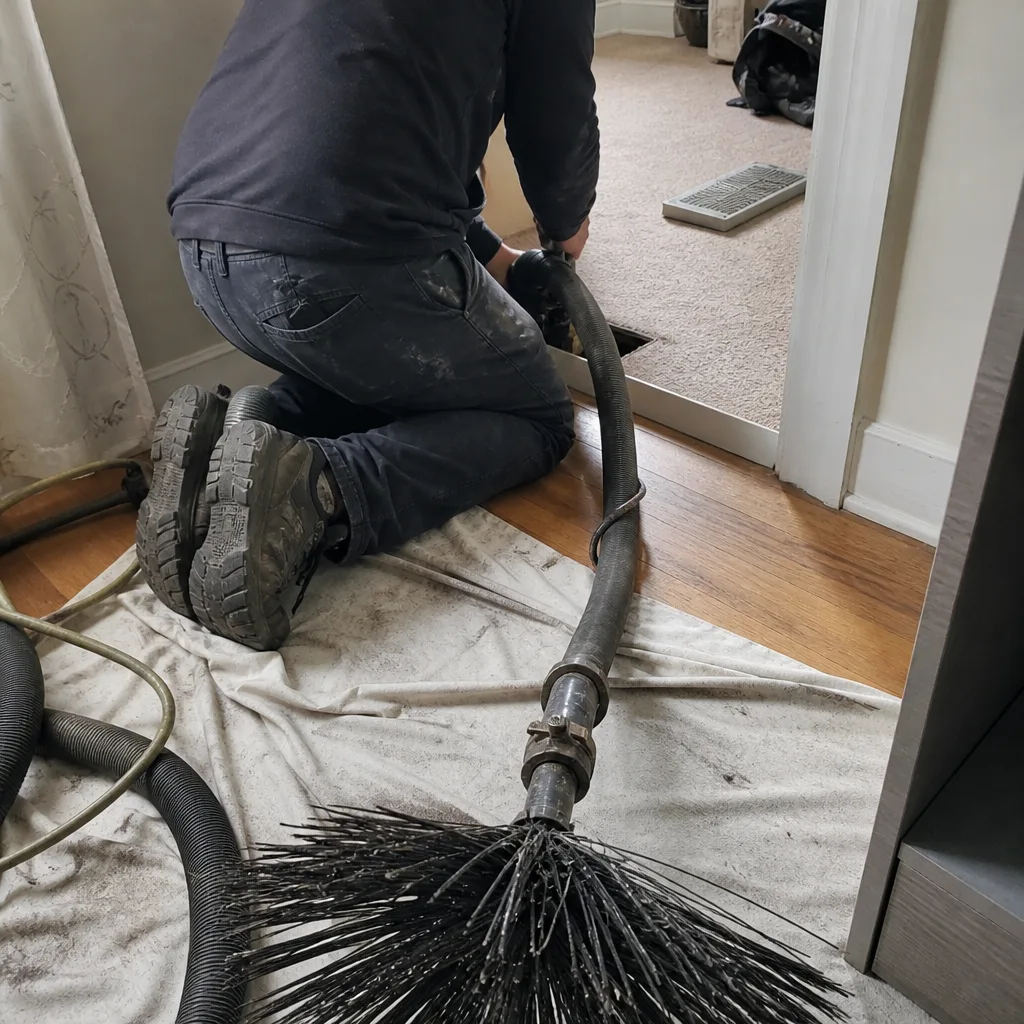 Before
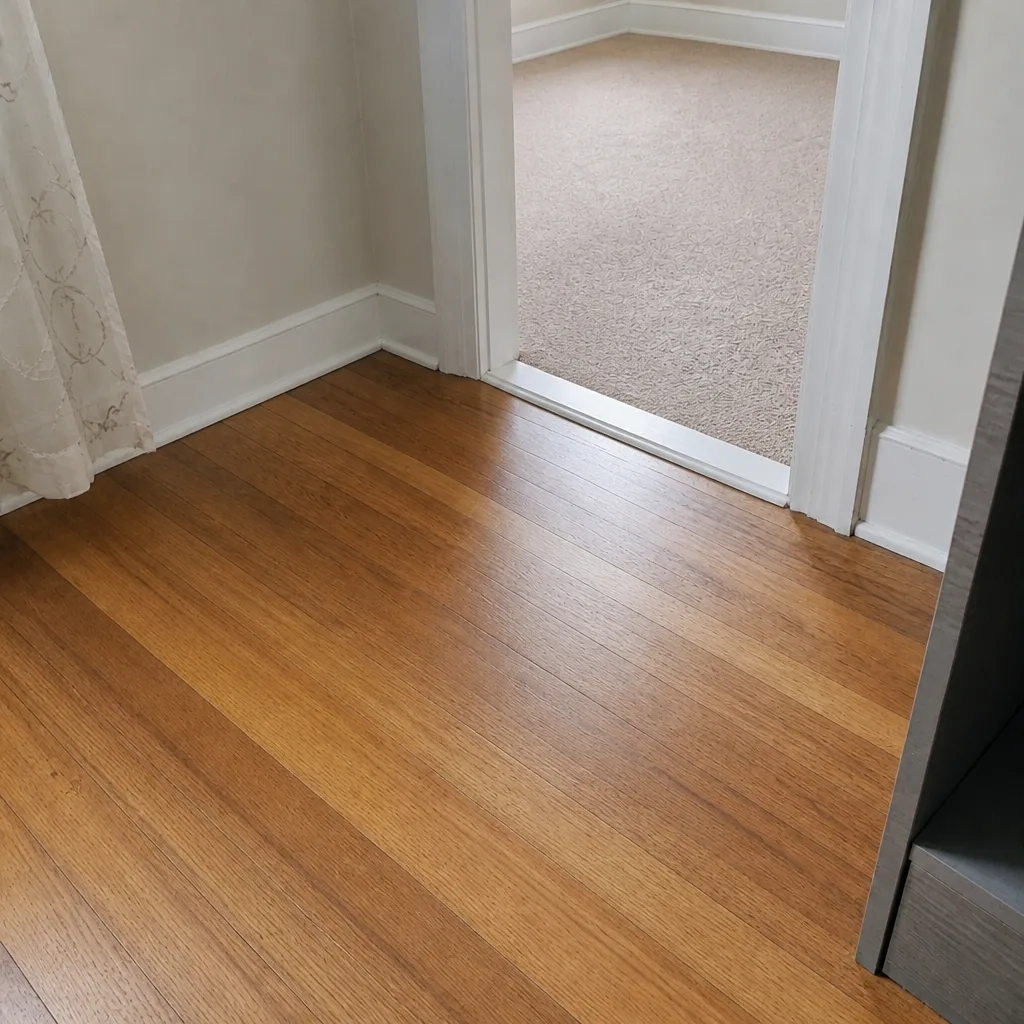 After
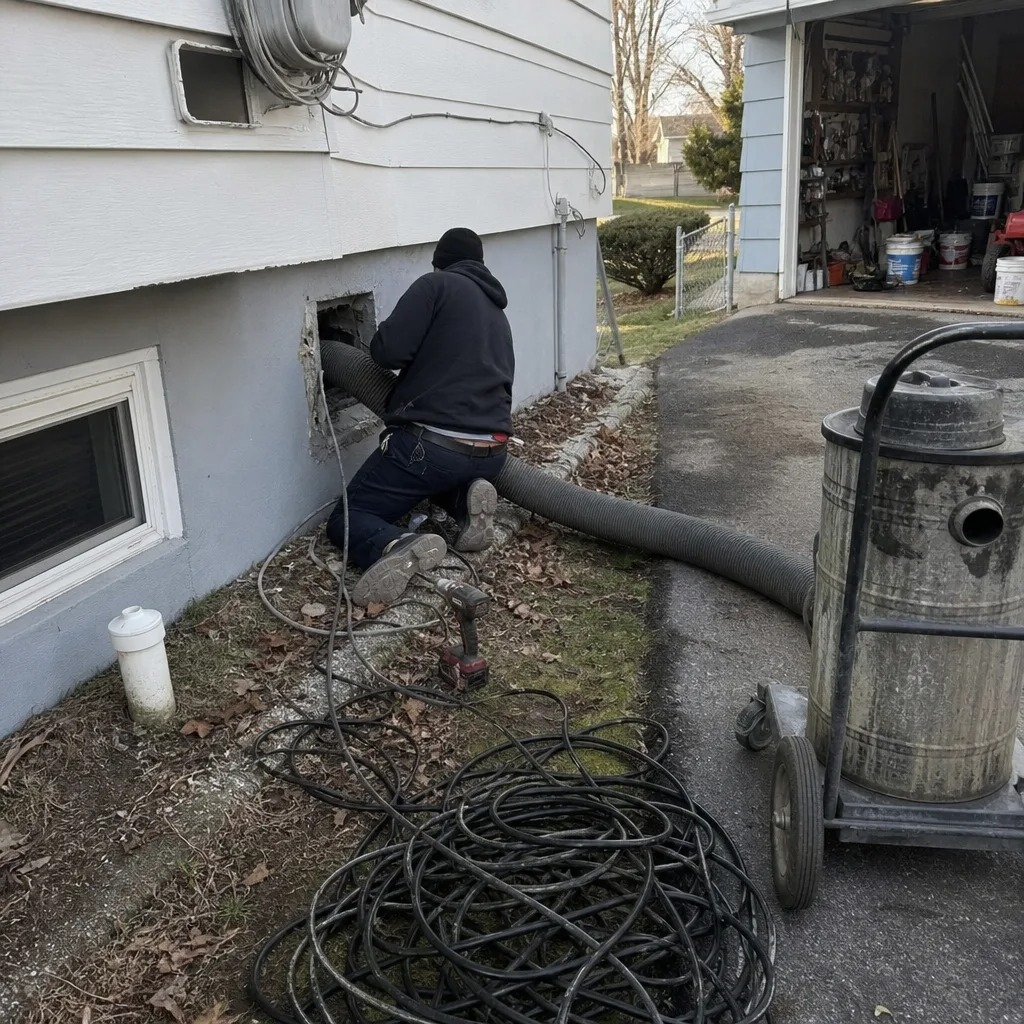 Before
 After
 Before
 After
When to Call a Professional
Call a professional if any of these describe your situation: visible mold or dark staining inside a register or on the plenum; a musty smell that returns after you clean your own registers; a recent HVAC repair or a system you just bought a home with; fiberglass-lined ductwork; vermiculite insulation near the duct runs; rodent activity in the system; a dryer that takes two cycles to dry a load; or duct joints visibly separated in the attic or crawlspace. For everything else, a pre-inspection is the right first step so you can decide between targeted service and a full system cleaning on the facts rather than a sales script.
Air Duct Cleaning Bedford Park offers free estimates in Bedford Park – call (844) 702-0856. We answer 24/7. Fast dispatch from 7am to 7pm, Sunday through Friday, and we’re closed Saturday. The local professionals we connect you with are licensed and insured as the state requires, and the price is set per job by the written estimate before any work begins.
To see the full range of what we cover, start with Air Duct Cleaning Bedford Park.
Frequently Asked Questions
It depends on the size of the system, the number of runs, and whether the work is targeted or whole-system. We don’t quote per vent, because that’s the pricing model that produces surprise invoices once a technician is on site. Call (844) 702-0856 for an exact quote – estimates are free, and the written estimate sets the final price.
Because they’re usually quoting a different job: a vacuum hose on the registers with no HEPA capture, no trunk cleaning, and no pre-inspection. Ask any company what equipment they’re bringing and whether the quote covers the trunk line, the return plenum and the air handler coil. A quote that doesn’t itemize those is a partial clean at a low headline price.
Before-and-after photos of your own ducts. Ask for them before you book. A company that can’t show you what the inside of your trunk line looked like before and after the job hasn’t given you a way to verify anything, and you should treat that as a red flag.
Most homes don’t need annual cleaning. It depends on pets, recent renovation, allergy concerns in the household, and whether you’ve had a moisture problem or rodent activity in the system. A pre-inspection answers it for your specific home in Bedford Park instead of a generic schedule.
Yes, if a pre-inspection shows the trunk line and coil are in reasonable condition. Register cleaning is legitimate maintenance. Cleaning the trunk line and return plenum yourself is where the risk starts, because consumer equipment loosens debris without capturing it.
No. The dryer vent is a separate run with a separate fire-safety risk. It needs its own service slot, and any company that bundles it as an afterthought isn’t treating lint accumulation as the fire hazard it is. Call (844) 702-0856 to book dryer vent cleaning on its own or alongside a duct cleaning.
The Bottom Line
The DIY vs professional question is the wrong frame for most Bedford Park homeowners. The real question is containment. Register cleaning, filter maintenance and lint screen upkeep are yours to do, and that work is worth doing. The trunk line, return plenum and air handler coil need negative-pressure HEPA capture – Rotobrush contact cleaning, Nikro source removal and Abatement Technologies air scrubbing – because consumer equipment there redistributes what it disturbs. Get a pre-inspection first. Let it tell you whether you need targeted component service or a full system cleaning, and let the written estimate be the number you decide against. Call (844) 702-0856 for a free estimate. We answer 24/7. Fast dispatch from 7am to 7pm, Sunday through Friday.
Written by the team at Air Duct Cleaning Bedford Park.